|
Resources: York River Water Budget - Biological Method
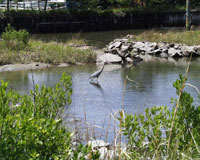 This method is the most flexible, most commonly used in the U.S. and can be used to consider the needs of multiple species or life history stages. This method is the most flexible, most commonly used in the U.S. and can be used to consider the needs of multiple species or life history stages.
Goal: provide or retain a suitable physical habitat for the aquatic organisms that live in the river by comparing water depth and velocity with the habitat suitability requirements for a species of interest over a variety of flows to determine how suitable habitat area varies with flow.
Advantages: preserves (or improves) habitat in terms of depth and velocity, but does not necessarily preserve river character. The relationship between habitat area and flow is generally non-linear, so flow recommendations are set at the threshold above which diminishing returns are realized.
Disadvantages: its focus on a target species may fail to consider other, important aspects of the river ecology. Resulting minimum flow recommendations are dependent on stream size, with higher minimum flows requirements in smaller streams. Can be labor intensive and expensive to develop.
|
|
