Resources: York River Water Budget - Freshwater Tidal Marshes as an Indicator of Estuarine Condition
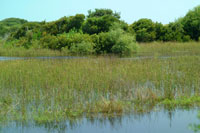 The distribution and health of freshwater tidal marshes is the most viable potential indicator of estuarine condition because they are extensive throughout the Mattaponi and Pamunkey Rivers. The distribution and health of freshwater tidal marshes is the most viable potential indicator of estuarine condition because they are extensive throughout the Mattaponi and Pamunkey Rivers.
Tidal freshwater wetlands are riverine areas characterized by measurable tidal fluctuation and salinities of less than 0.5 ppt. They are located downstream of the fall line and upstream of salt wedge intrusion. There are a wide variety of plant species found in the tidal freshwater regions of the York River Estuary, characterized by varying sensitivity to salt and inundation.
Tidal freshwater marshes have diverse plant communities and community composition. They support a diverse fish community, including a mixture of warm freshwater species, estuarine species with wide ranges and anadromous marine species that use the tidal freshwater for spawning and nursery habitat.
As sea level rise continues, it is critical that marshes elevate themselves to prevent a loss of these ecological services. A change from freshwater to brackish water species could have significant impacts on the long-term survival of marsh functions.
There are a number of potential impacts to tidal freshwater marshes associated with changing environmental conditions (both anthropogenically influenced and natural). Predicted increases in sea-level rise will increase flooding and salinity levels in estuaries, impacting plant species productivity and survival, potentially leading to changed in plant community.
Tidal freshwater wetlands are the best ecological candidate for evaluating the impact of changes in freshwater flow on the York River Estuary because:
1. they are extensive,
2. easy to observe,
3. have a relatively long historical record, and
4. they affect numerous other parts of the biotic ecosystem.
|
