|
Resources: York River Water Budget - Hydraulic Method
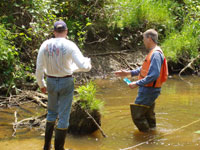 The hydraulic method uses physical information (such as depth, width, velocity and wetted perimeter) and relates that information to rates of stream flow. The hydraulic method uses physical information (such as depth, width, velocity and wetted perimeter) and relates that information to rates of stream flow.
Wetted perimeter "food producing area" usually increases with flow and sometimes has a threshold level which indicates bankfull flow levels.
Problems:
1. tidal producers (such as marsh plants and algae) require both wet and dry periods to be functional,
2. may also be related to biological indicators (i.e. a specific fish species) when the river width is related to useable fish habitat, and
3. this method never results in a zero flow recommendation, which may restrict its use under certain conditions.
Advantages:
1. it retains the width of the river thus maintaining flow characteristics but resulting water depth depends on the channel morphology, and
2. it is dependant on stream size. The hydraulic method tends to give higher minimum flow requirements for smaller streams than larger ones.
|
|
