Resources: York River Water Budget - Hydrologic Methods
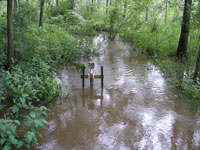 The hydrologic method relies on an analysis of historic flow measures, making it the fastest and cheapest of the three methods. The hydrologic method relies on an analysis of historic flow measures, making it the fastest and cheapest of the three methods.
Assumptions: lower than natural flows are harmful to the stream ecosystem and that keeping the minimum flow within natural, historic bounds will sustain aquatic life.
Advantages: maintains the hydraulic conditions so a fast moving river will remain a fast moving river, while a slow river will still have a slow flow. Maintains the character of the river, and may help preserve diversity.
Disadvantage: does not specifically take into account the aquatic biota or recreational water uses.
There are five types of hydrological methods that are commonly used:
1 . The Tennant method is based on a percentage of mean annual flow, which varies seasonally, and is intended to be optimized for faunal and recreational usages,
2. 25% of mean annual flow,
3. The ABF Q50 (Aquatic Base Flow calculated from the median flow in August),
4. Q90 (monthly flow equaled or exceeded 90% of the time), and
5. 7Q10 (the statistical 7-day low flow that occurs on average every 10 years).
|
