|
Living Shorelines: Design Options - Bank Grading
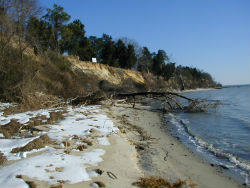
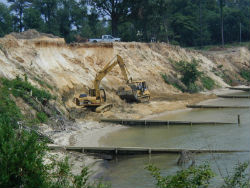
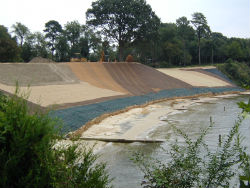
The objective of bank grading is to reduce the steepness of the bank slope and decrease erosion caused by waves striking the bank toe. A more gradual slope allows for wave “run-up” and dissipation of wave energy and there is a better foundation for vegetation growth. Graded banks should be stabilized with native plants that hold soil in place, intercept surface and sub-surface runoff and absorb energy from storm waves. This process can be combined with planted marshes or erosion control structures for increased effectiveness.
Suitable Sites
-
Active erosion at top and toe of bank
-
Low cleared banks with lawns
-
Unstable high banks with undercut or falling trees
-
Unstable banks adjacent to tidal marshes
-
No adjacent bulkheads, revetments or upland improvements in close proximity
-
Plenty of sunlight will reach graded slope
Guidelines for Bank Grading
-
Consider grading only the top or toe of the slope to minimize land disturbance
-
Consult with local Chesapeake Bay Preservation Act authorities, Water Quality Impact Assessment and replacement trees and other landscaping may be required
-
Coordinate with adjacent property owners in advance, gradual transitions to adjacent grades may be needed
-
Construction access must be available, temporary stockpile areas may be needed
-
The target slope should be 6:1, although a 3:1 slope may be satisfactory especially if combined with other methods of shore protection
-
Analyze sediment type(s) to determine suitability for shoreline or other uses
-
Re-direct and manage upland runoff away from the graded bank
-
Use temporary erosion control mats, blankets and fiber logs for stabilization until vegetation is established
-
Landscape restoration design should incorporate native plants suited to local soil, sunlight, salt and wind conditions; non-native plants should be adapted to similar conditions
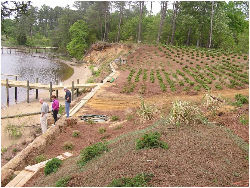 |
Landscape designs for graded banks may require extensive planting and maintenance until established, but the restored vegetation buffer will provide sustainable erosion protection, water quality and habitat services. |
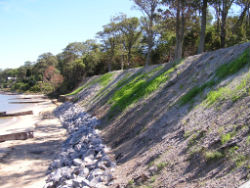 |
Successful bank grading projects will anticipate slope conditions after grading and the potential for vegetation growth. In this case, vegetation recovery has been compromised by excessive shading due to shoreline orientation and the steepness of the graded slope. |
|
|