|
Living Shorelines: Design Options - Vegetation Management
What is riparian vegetation management?
Minor erosion can be reduced by simply improving the vegetation cover that already exists in the upland, on the shoreline bank, and in tidal wetland and dune areas. Enhancing the vegetation cover in all shoreline habitats creates an integrated vegetation buffer. Periodic inspections and routine maintenance helps keep this living erosion buffer healthy and resilient for storm recovery.
Suitable Sites
Guidelines for Vegetation Management
Upland Bank and Riparian Buffer
-
Do not mow frequently close to the shoreline; replace waterfront lawn with deep-rooted ornamental grasses, shrubs and small trees
-
Prune tree branches with weight bearing load over the water
-
Selectively remove dead, dying and severely leaning trees (seek advice from professional arborist)
-
Add new trees, shrubs and ground cover; choose native upland species similar to existing native plant community
-
Control invasive upland species introduced by previous clearing
-
Intercept or re-direct stormwater runoff that interferes with plant growth
Tidal Marsh
-
Remove tidal debris periodically
-
Replace wetland plants in storm damaged areas if natural recovery does not occur
-
Limit foot traffic and recreation access through marsh vegetation
Beach and Dune
-
Limit foot traffic through beach and dune vegetation with designated access points and open-pile boardwalks
-
Add new dune plants to increase the area covered by vegetation
-
Use sand fences to limit access and encourage plant growth
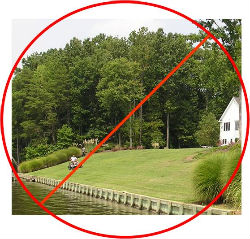 |
Sloped lawns on the waterfront should be replaced with mulched beds planted with deep-rooted native plants. |
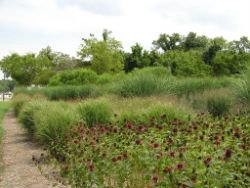 |
Low maintenance, salt-tolerant native plants were included in the planted riparian buffer at Yorktown, VA. |
 |
A sloped lawn on the York River was planted with salt and wind-tolerant trees and shrubs at VIMS. |
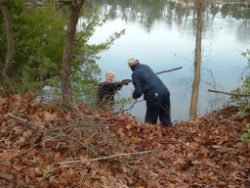 |
Pruning overhanging tree branches can increase the amount of sunlight for tidal marsh growth; it also decreases the weight-bearing load that may cause trees to fall over. |
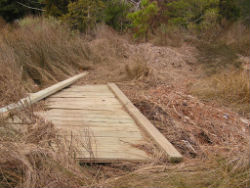 |
Storm debris, dead vegetation and other “wrack” that smothers tidal marsh vegetation should be removed at least once a year in early spring. |
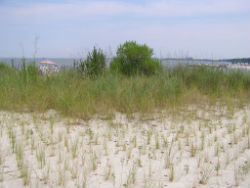 |
Saltmeadow hay (Spartina patens) planted next to natural beach vegetation increases the area covered and the level of erosion protection. |
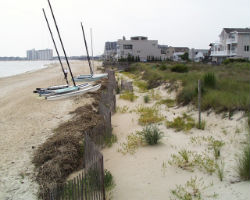 |
Sand fences can be used for temporary control of recreation access, which encourages better dune vegetation growth. |
|
|
